Lead Generation · SEO · Web Development
How to Create a Lead Generation Website That Turns Traffic Into Enquiries
A practical guide to choosing the right pages, matching search intent, building trust, designing the enquiry journey and measuring what happens after launch.
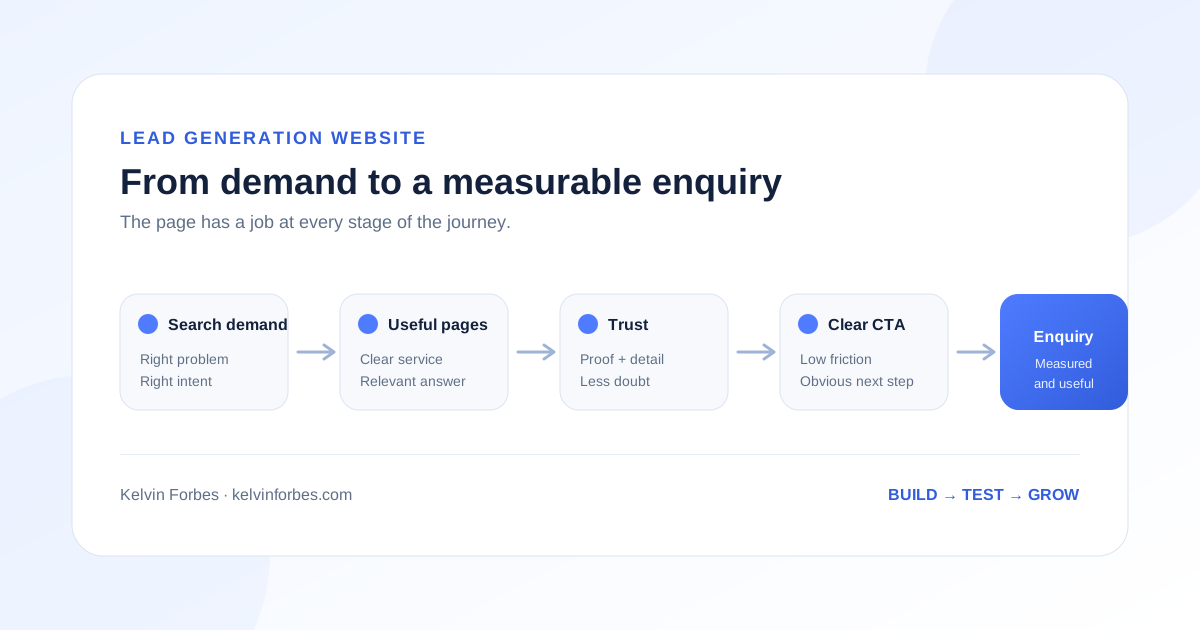
If you want to create a lead generation website, the important question is not “which template looks best?”. It is: what has to happen between somebody discovering the site and becoming a genuine enquiry?
That sounds obvious, but plenty of websites skip the middle. They attract traffic, list a few services, add a form and hope the visitor joins the dots. A better lead-generation website deliberately connects demand, relevance, trust and a clear next step.
This guide shows the framework I would use when building one from scratch. If you would rather have the site planned and built for you, see my lead generation website design service.
What a lead generation website actually is
A lead generation website is built around a measurable commercial action. That might be a quote request, consultation booking, phone call, callback request or another form of qualified enquiry.
The website still needs to look credible and work well, but design is serving a bigger job. Each important page should help the right visitor answer three questions: am I in the right place, can I trust this offer, and what do I do next?
How to create a lead generation website: 9 practical steps
1. Pick the conversion before the layout
Decide what a useful lead looks like. “Contact us” is not a strategy. A local service business might want quote requests with a postcode and service type. A B2B consultant might want a short discovery-call form. The action should match the value and complexity of the service.
2. Research how demand actually appears
Before writing pages, look at the language potential customers use, the search results already serving that intent and the alternatives people compare. Search volume is useful, but intent matters more. A smaller phrase from somebody actively looking for a service can be worth more than a broad high-volume topic.
3. Map one clear intent to each important page
Give genuinely different services their own useful pages. The same applies to locations when the business really serves them and can say something specific. Avoid producing dozens of near-identical pages just because a keyword tool suggests every town in the country.
4. Write the offer before polishing the design
Your hero section should quickly say what you do, who it is for and what happens next. Then explain the service, fit, process, likely questions and boundaries. A visitor should not need to decode vague phrases such as “innovative solutions for modern businesses”.
5. Add trust where doubt naturally appears
Trust is not a single testimonials block near the footer. It can come from useful detail, real project examples, transparent process, clear pricing where suitable, realistic limitations, identifiable contact information and evidence that you understand the problem.
6. Make the next step obvious but proportionate
Ask only for the information you need. Long forms can filter leads, but they also create friction. Short forms are easier to complete but may produce more weak enquiries. Choose deliberately rather than copying somebody else's form.
7. Build the technical SEO and mobile experience in from the start
Use crawlable pages, unique titles and descriptions, sensible headings, internal links, canonical URLs, an XML sitemap and descriptive image alternative text. Test the form, navigation and primary call to action on a phone, not just a desktop preview.
If you want an independent pass before launch, my software testing and QA work focuses on broken flows, confusing states and the journeys most likely to cost you users.
8. Track the enquiry, not just the visit
Traffic is an input. The commercial signal is what happened next. Track completed forms, calls or bookings and record the source where possible. Supporting events such as form starts and key-page visits can help diagnose friction, but they should not become vanity metrics.
9. Improve from real behaviour
Launch is when useful evidence starts. Search Console can reveal the phrases that trigger impressions. Analytics can show which landing pages lead to action. Sales conversations can reveal questions the website failed to answer. Use that evidence to improve the site instead of endlessly redesigning it by taste.
A simple lead generation website structure
You do not need a huge site to start. A focused service business might begin with:
- Homepage — positioning, main services, trust and the primary next step
- Service pages — one useful page for each materially different service
- About / proof — who is behind the work, approach and relevant evidence
- Articles / guides — supporting questions that deserve a full answer
- Contact / enquiry — a clear, working conversion path
Add location pages only when they are genuinely useful. Add more articles when there is a real search question, sales objection or internal-linking need. Content volume on its own is not an advantage.
SEO, paid traffic and the route to demand
A lead-generation website cannot manufacture demand. It needs a realistic route to people who already have the problem.
SEO can compound over time, but rankings depend on competition, authority, relevance and execution. Paid ads can create traffic faster, but weak positioning or a poor landing page can simply make you pay to discover that the site does not convert.
The two can work together. Search research helps clarify language and intent; paid campaigns can expose offer or conversion problems quickly. My digital marketing consultancy connects SEO, Meta Ads and conversion decisions to the actual commercial goal.
Common lead generation website mistakes
Vague positioning: the visitor cannot quickly tell what you do or whether it is for them.
Too many competing calls to action: every section asks for a different thing, so no next step feels primary.
Thin SEO pages: dozens of service or location pages repeat the same copy with a keyword changed.
No proof near the decision: the site makes large claims but provides little detail, evidence or reassurance.
A blog with no commercial bridge: articles attract readers but do not connect naturally to the service that solves the problem.
No measurement: traffic increases but nobody can say which pages or channels generate useful enquiries.
Lead generation website launch checklist
- The primary audience and offer are obvious above the fold
- Each important page serves a distinct search or buyer intent
- Titles, descriptions, headings and canonicals are unique
- Calls to action use clear language and point to a working next step
- Forms work on mobile and have useful confirmation states
- Trust and proof appear before high-friction decisions
- Key pages link to relevant service pages and supporting articles
- The XML sitemap contains every indexable page
- Enquiries can be measured by source or landing page where possible
- No ranking, revenue or lead-volume guarantees are being made without evidence
The useful test: can you explain the journey?
When you are building a lead generation website, you should be able to describe the journey without mentioning colours, animations or a favourite template:
The right person finds this page because they have this problem. The page confirms the fit, answers these doubts, gives them this reason to trust us and asks for this next step.
If that sentence is fuzzy, more design is unlikely to fix the underlying problem.
Frequently asked questions
What is a lead generation website?
A lead generation website is built around a measurable action such as an enquiry, consultation request or quote request. Its pages attract relevant visitors, explain the offer, build trust and make the next step clear.
How many pages does a lead generation website need?
There is no useful fixed number. The site needs enough pages to cover genuinely different services, search intents and locations without creating thin or repetitive pages simply to target keywords.
Does a lead generation website need SEO?
Not always, but it needs a route to demand. That may be organic search, paid advertising, referrals, email, social media or a mix. If SEO is part of the plan, structure and keyword intent should be considered before the site is built.
What should a lead generation website measure?
At minimum, measure meaningful enquiries and where they came from. Useful supporting signals include form starts and completions, calls, key page visits and the landing pages that generated the enquiry.
This article is general guidance, not a promise of rankings or lead volume. Search performance depends on demand, competition, authority, offer quality and execution.